









-
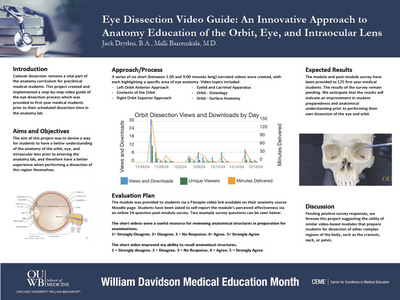
Eye Dissection Video Guide: An Innovative Approach to Anatomy Education of the Orbit, Eye, and Intraocular Lens
Jack Dryden and Malli Barremkala
Publication Date: 4-29-2025
-

Cost Effectiveness of Sending of Routine Collection of Sinus Contents in Skull-Base Patients
Jonathan Grey, Caroline Roberts, Amanda Bachand, Jacob Keeley, and Adam Folbe
Publication Date: 5-2025
- Following endoscopic skull-base surgeries, it is common practice to send sinus contents for histopathological review and examination, in addition to the tumor/pathology itself.
- Histologic analysis of standard surgical specimens has long been thought to enhance diagnostic precision, ensure quality control, and offer procedural documentation.1 However, with rising healthcare costs, the necessity of this practice has been challenged in specific situations, such as this one.1
- In this study, we sought to determine if the regular collection of sinus contents uncovers another disease process or informs clinical decision-making.
- We also determined the cost of routinely sending sinus contents to pathology for evaluation.
- We believe that there is no clinical benefit to sending sinus contents to pathology, and that it is not cost effective.
-

A Quantitative Analysis on the Locations of Phase 3 Retina Trials in the United States over the past 5 Years
Shahrukh Naseer and Tarek Hassan
Publication Date: 5-2025
• Clinical trials are essential for advancing treatments in ophthalmology, yet comprehensive data on institutional participation in Phase 3 retina trials is not readily available.
• The U.S. National Library of Medicine Clinical Trials database (NLM database) lists individual research sites for each study; however, aggregating and visualizing this data remains challenging.
• The lack of centralized and easily interpretable data on research site participation hinders understanding of institutional contributions to retinal clinical research.
• Identifying geographic and institutional trends can improve resource allocation and research collaboration.
• We aim to
• Quantify the number of unique institutions participating in Phase 3 clinical retina trials.
• Assess the distribution of trials across research sites.
• Analyze state-level variations in participation.
• Hypothesis
• Institutional participation in Phase 3 retina trials is unevenly distributed, with a concentration in certain geographic regions and academic centers.
• Understanding trial site distribution can inform funding decisions, improve patient access to clinical trials, and guide future research efforts.
• Findings may help stakeholders optimize trial site selection and enhance equity in ophthalmic research participation.
-

Custom Gene Panel Sequencing of FEVR Patients and Family Members
Rima Stepanian, Gabrielle Abdelmessih, Kim Drenser, Antonio Capone Jr, Michael T. Trese, Wendy Dailey, and Ken Mitton
Publication Date: 5-2025
Familial exudative vitreoretinopathy, or FEVR, defines a group of inherited retinal diseases marked by abnormal blood vessel growth in the retina, causing poor vascular development in the peripheral retina. It is linked to increased vessel permeability and may result in retinal ischemia, exudative retinal detachment, and subsequent vision loss. It can be inherited through autosomal dominant, autosomal recessive, or X-linked recessive patterns. There is no definitive treatment or cure, but is treated based on staging of disease on an individual case-by-case basis. Genomics is a rapidly growing field in personalized medicine. Targeted next-generation sequencing (NGS) enables fast and cost-effective identification of genetic variations. NGS allows for the simultaneous sequencing of millions of base pairs of genetic information in just hours.
-

Accuracy of diagnosis codes for patients with concurrent geographic atrophy and exudative age-related macular degeneration
Megan Clontz, Jong Park, Xing Chen, Tedi Begaj, Margaret Runner, and Jeremy Wolfe
Publication Date: 5-2024
INTRODUCTION
Age-related macular degeneration (AMD) is a leading cause of blindness. This disease progresses from the non-exudative/non-neovascular form to geographic atrophy (GA) or exudative AMD, which are regarded as distinct late AMD subtypes. However, histopathologic data confirms their coexistence. Despite this evidence, the International Classification of Diseases (ICD) diagnostic coding system offers no option for GA within the context of exudative AMD. Thus, the likelihood of underreporting GA coexisting with exudative AMD in the electronic medical record (EMR) is highly probable.
METHODS The study design was a cross-sectional retrospective chart review. EMRs of patients with exudative AMD who were seen at Associated Retinal Consultants in April 2021 were reviewed. These patients’ optical coherence tomography (OCT) scans were reviewed by two trained graders to evaluate for the presence of GA. Visual acuity, documentation of GA in the diagnosis codes, physical examination findings, and OCT interpretation were recorded.
RESULTS
A total of 656 patients were identified with exudative AMD, of which 377 (57%) had concurrent GA by OCT. This cohort had 102 males (27%) and 275 females (73%), with a mean age of 83.5 ± 9.0 (SD) years. An accurate ICD-10 code of GA was documented in 31 of the 377 patients (8%), while 346 of the 377 patients (92%) had evidence of GA on OCT but no diagnosis code for GA documented in the EMR. Although GA was not coded, 257 patients (68%) had GA documented accurately in the examination findings and 202 patients (54%) had GA documented accurately in the OCT interpretation.
CONCLUSIONS
A majority of patients with exudative AMD have evidence of concurrent GA on OCT. However, most do not have a GA diagnosis code listed in the EMR. Improving coding accuracy for GA will be important for identifying patients in large data registry studies and aid in selecting patients for new therapies.
-

Targeted-Sequencing Evaluation for FZD4 Variants in Familial Exudative Vitreo-Retinopathy
Mary Drekh, Wendy Dailey, Vincent Le, Savyo Krikor, Kimberly A. Drenser, and Kenneth P. Mitton
Publication Date: 5-2024
- The Familial hereditary vision loss disease may present with symptoms including retinal detachment, folding, neovascularization, or vitreous hemorrhage due to peripheral retina avascularity.
- The manifestation of FEVR genetically has been associated with a loss of function mutation of the Wnt/bcantenin-signaling pathway involving 7 genes (FZD4, NDP, CTNNB1, KIF11, LRP5, TSPAN12, and ZNF408). In our patient population of 72 individuals the distribution of FZD4 gene variants leading to FEVR has been recorded.
- The Frizzled4 gene (FZD4) codes for the G-coupled protein receptor and effects Wnt/b-cantenin-signaling pathway In endothelial cells.
- What frequency of FEVR from our patient pool will have FZD4 variants known to be protein altering? Will novel mutants of this gene have hereditary pathogenic effects?
- Due to the variable severity of FEVR even within a single family, it is possible that having protein-altering variants in more than one of these FEVR-associated genes including FZD4 is a contributing factor to phenotypic variability. What is the frequency of Multigenic variants leading to FEVR?
-

A Novel Targeted-Sequencing Panel to detect LRP5 Gene Variants in Orphan Pediatric Retinal Diseases
Daeun Jeong, Kenneth P. Mitton, and Kimberly A. Drenser
Publication Date: 5-2024
Orphan pediatric retinal diseases which encompass Familial exudative vitreoretinopathy (FEVR), Norrie Disease, and Retinoschisis are associated with mutations in genes involved in the Wnt signaling network, including FZD4, LRP5, TSPAN12, and NDP. See figure-1. FEVR is a retinal disease that lacks normal vascularization and angiogenesis to the peripheral retina. LRP5 variants account for 10-25% of cases of autosomal dominant FEVR. However, not all cases have been linked to these existing variants. Next generation sequencing was used to sequence 76 subjects for novel variants to expand the spectrum of LRP5 variants and better understand the mechanism of pathogenicity.
-

Accuracy of ORA and newer generation formulas for IOL power calculation after prior refractive surgery
Raheel Khan and Mark Rolain
Publication Date: 5-2024
- Patients with cataracts have cloudiness of the lens that impairs vision.
- It must be replaced with a prosthetic lens however the lens’ refractive power has to be calculated using formulas to predict the kind of lens that will be implanted for best visual outcomes.
- Patients that have had prior refractive surgery of the cornea do not have as good refractive outcomes after cataract surgery.1
- The concern is that there is not a goldstandard formula that can be used for this population to predict the refractive power of the lens that should be implanted.
- Optiwave refractive analysis (ORA) is a new technology that is supposed to better predict refractive power of the implanted lens for patients with a history of refractive surgery.
- Newer formulas have also been developed to try to address this.
- We plan to determine whether ORA or newer generation formulas are more accurate in predicting refraction for cataract surgery patients with a history of refractive surgery.
-

Molecular characterization of KIF11 variants in Familial Exudative Vitreoretinopathy
Konstantinos Koustas, Kenneth P. Mitton, Wendy Dailey, and Kimberly A. Drenser
Publication Date: 5-2024
Pediatric retinal diseases including Familial exudative vitreoretinopathy (FEVR) and Norrie Disease are linked to mutations in Wnt signaling network genes like FZD4, LRP5, TSPAN12, and NDP (see Figure-1). Active Norrin signaling is crucial for the normal growth and proliferation of developing retinal vasculature. Similarly, the absence of KIF11's kinesin activity can hinder the growth and proliferation of retinal vasculature, leading to peripheral avascular neural retina. According to the UniProt database there are about 41 disease causing variants for KIF11, and 17 specifically associated with FEVR. Nextgeneration sequencing was employed to sequence 76 subjects, aiming to identify novel variants to broaden the spectrum of Kif11 variants and gain deeper insights into the mechanism of pathogenicity.
-

Physician-Patient Face Masking’s Influence on Post-Intravitreal Injection Endophthalmitis Rates
Conner Liddle, Antonio Capone Jr, and Matthew Trese
Publication Date: 5-2024
Intravitreal injections (IVI) of anti-vascular endothelial growth factor (VEGF) medications and intravitreal steroids are standard treatment options for variety of retinal diseases. Serial IVIs are often required to achieve disease control, but IVIs are not without risk. Recognized serious complications of IVIs include but are not limited to retinal detachment, vitreous hemorrhage, and acute endophthalmitis.1 Although post-IVI endophthalmitis is uncommon, it is a feared complication because of the potential for irreversible vision loss. Given that IVIs are one of the most commonly performed medical procedures in the United States, it is essential to ensure that steps are taken to mitigate the risk of serious complications such as endophthalmitis.
Although previous studies have suggested a role for face masking during IVI, this measure was not routinely performed by all ophthalmologists who were treating patients with IVIs. The recent Coronavirus Disease 2019 (COVID-19) pandemic offered a unique opportunity to better evaluate the role of face masking by both physicians and patients as hospital systems, State and Federal mandates were universally implemented to reduce the spread of COVID-19. Thus, both ophthalmologists and patients were masked during IVIs. This study leveraged these mandatory policies to explore the role that face masking may have on endophthalmitis rates after IVI. In doing so, this retrospective study evaluated the incidence of IVIs both before (unmasked) and during (masked) the COVID-19 pandemic to better understand the influence of face masking on post-IVI endophthalmitis.
-

Performance Assessment of an Artificial Intelligence Chatbot in Clinical Vitreoretinal Scenarios
Michael J. Maywood, Ravi Parikh, Avnish Deobhakta, and Tedi Begaj
Publication Date: 7-2024
As artificial intelligence chatbots evolve as a tool in medicine, it is important to inspect and understand their strengths and limitations.
The purpose of this study was to benchmark the performance of ChatGPT by determining the accuracy of the AI chatbots responses in complex open-ended vitreoretinal clinical scenarios.
Our secondary purpose was to validate the sources used by ChatGPT to answer clinical prompts.
-

Coats and Coats-like Retinopathy in Female Patients
Zara Saleem, Drew Scoles, and Antonio Capone Jr
Publication Date: 5-2024
To report the presentation, stage, clinical characteristics, and course of female patients with Coats and Coats-like retinopathy.
-

Impact of Surgical Management and Systemic Steroids on Visual and Anatomic Outcomes of Suprachoroidal Hemorrhage
Sahal H. Saleh, Tianyu Liu, Lisa J. Faia, Nathan D. Farley, Bruce Garretson, Sandeep Randhawa, Jeremy D. Wolfe, Paul V. Raphaelian, and George A. Williams
Publication Date: 7-2024
Suprachoroidal hemorrhage (SCH) is vision-threatening accumulation of blood in the suprachoroidal space.
This rare but visually significant ocular complication can occur spontaneously, following trauma, or following intraocular surgery.
The impact of surgical management on SCH is unclear, and the effect of systemic steroids on outcomes of SCH has not been directly studied.
-

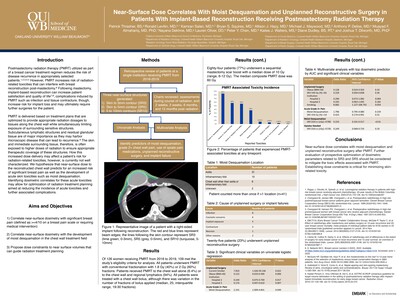
Near-Surface Dose Correlates With Moist Desquamation and Unplanned Reconstructive Surgery in Patients With Implant-Based Reconstruction Receiving Postmastectomy Radiation Therapy
Patrick Thrasher, Ronald Levitin, Bryan S. Squires, Allison J. Hazy, Michael J. Maywood, Anthony P. Delise, Muayad F. Almahariq, Nayana Dekhne, Lauren Oliver, Peter Y. Chen, Kailee J. Walters, Diane Dudley, and Joshua T. Dilworth
Publication Date: 5-2024
Postmastectomy radiation therapy (PMRT) utilized as part of a breast cancer treatment regimen reduces the risk of disease recurrence in appropriately selected patients.1,2,3,4,5 However, PMRT increases risk of radiationrelated toxicities that can interfere with breast reconstruction post-mastectomy.6 Following mastectomy, implant-based reconstruction can increase patient satisfaction and quality of life7,8; complications induced by PMRT such as infection and tissue contracture, though, increase risk for implant loss and may ultimately require further surgeries for the patient.
PMRT is delivered based on treatment plans that are optimized to provide appropriate radiation dosages to tissues along the chest wall while simultaneously limiting exposure of surrounding sensitive structures. Subcutaneous lymphatic structures and residual glandular tissue are of major importance as they may harbor microscopic disease that can lead to recurrence.9 The skin and immediate surrounding tissue, therefore, is often exposed to higher doses of radiation to ensure appropriate therapeutic coverage of these structures. How this increased dose delivery may affect a patient’s risk for radiation-related toxicities, however, is currently not well characterized. We hypothesize that near-surface dose to the reconstructed chest wall predicts for an increased risk of significant breast pain as well as the development of acute skin toxicities such as moist desquamation. Identifying dosimetric correlates for these acute toxicities may allow for optimization of radiation treatment planning aimed at reducing the incidence of acute toxicities and further associated complications.
-

Using a Smartphone Based Fundus Camera to Remotely Diagnose Acute Ocular Pathology in the Emergency Room
Amro Omari, Momin Samad, Saaquib R. Bakhsh, Jahan Tajran, and George A. Williams
Publication Date: 4-28-2022
Objectives
- Fumdus photography is important for diagnosing and monitoring diseases of the retina and optic nerve
- Most fundus cameras are very expensive and unavailable inpatient and underserved areas
- Iphone based fundus cameras provide an affordable alternative for increasing access to ophthalmic care
-

Custom Ampliseq Targeted Sequencing Panel For Orphan Pediatric Retinal Diseases: Norrie Disease, FEVR, and Retinoschisis
Michael Sun, Wendy Dailey, Amanda Petrilli Cicerone, Jennifer Felisky, Kaylee Moyer, Naomi Haque, Alvaro Guzman, Kendra Mellert, Kimberly Drenser, and Kenneth P. Mitton
Publication Date: 5-2-2022
INTRODUCTION
DNA-sequencing is not readily available in countries with little research resources or where health insurance does not cover the costs. This is especially true for very rare (orphan) inheritable retinal diseases. We wanted to develop a rapid targeted-sequencing protocol for eight genes involved in Familial Exudative Vitreo-Retinopathy (FEVR), Norrie Disease, and Retinoschisis, at greatly reduced cost.
Printing is not supported at the primary Gallery Thumbnail page. Please first navigate to a specific Image before printing.