


Files
Download Full Text (412 KB)
Description
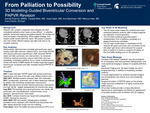
Three-dimensional cardiac modeling and printing are increasingly used in complex congenital cardiac surgery to help define the anatomy and spatial relationships and support more confident surgical planning. We report a child with heterotaxy, dextrocardia, right-dominant complete atrioventricular canal, double outlet right ventricle, and mixed total anomalous pulmonary venous return who had been repeatedly classified as inoperable and palliative. At our institution, an in-house multidisciplinary 3D modeling team enabled rapid segmentation of high-resolution CT/MRI data, creation of patient-specific printed heart models, and hands-on rehearsal of staged biventricular repair strategies. These models clarified intricate anatomical relationships, guided initial pulmonary venous reconstruction and intracardiac baffling, and later helped identify a plausible explanation for a residual partial an
The evolution of advanced cross-sectional imaging with CT and MRI, combined with interactive visualization and 3D printing of accurate models, has allowed experienced teams to consider repairs in cases where previously it was felt impossible.
This case supports the growing evidence that 3D cardiac modeling can offer new hope to patients labeled palliative by revealing repair pathways that are not apparent on traditional imaging alone and highlights importance of revisiting diagnoses deemed inoperable as we continue to make strides in advanced imaging and 3D simulations.
Publication Date
5-8-2026
Disciplines
Pediatrics
Recommended Citation
Sharma A, Miah T, Haw M. From palliation to possibility: 3D modeling guided biventricular conversion and subsequent PAPVR repair in a complex congenital heart disease. Presented at: Research Day Corewell Health West; 2026 May 8; Grand Rapids, MI.
Comments
2026 Research Day Corewell Health West, Grand Rapids, MI, May 8, 2026. Abstract 2001