


Files
Download Full Text (207 KB)
Keywords
patient intake, patient safety, nothing by mouth, fluid
Disciplines
Nursing
Description
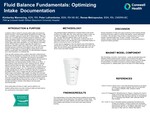
A patient's intake is critical for ensuring patient safety and enhancing clinical outcomes. In the hospital setting, all patients have either a diet order or are NPO (nothing by mouth) with IV fluids infusing.7NW as a whole unit, is incredibly good at tracking outputs for patients (ex. urine, drains, and ostomy output).An area for opportunity is tracking intake, specifically PO fluid intake. Charting IV fluid intake can be easily done as Epichelps make thosecalculations. It is more difficult to accuratelymonitor PO fluid intake in patients, especially with melted ice or abandoned, lukewarm water cups in their rooms.Whileit may not seem important and just a small part of the patient’s day to day life in the hospital, PO fluid intake is crucialfor getting a whole picture of the patient’s overall health. More specifically, it is vital information if patients are on fluid restrictions or a restricted diet.
There are often situations when a patient'sdiet order is advanced and their IV fluid rate decreased or discontinued; but they are not adequately taking in a lot of oral fluid. Dehydration can become a real problem, particularly in our elderly populations. Elderly patients are more prone to dehydration due to lower overall percentage of fluid in the body, decreased thirst, and reduced kidney function (Cohen et. al, 2021). A 2023 systemic review found that in both, med/surg and ICU, settings patients oral fluid intake was often incorrectly charted or simply not charted at all (Leinum et. al., 2023). 7NW is primarily a surgical unit (ex. urology, colorectal, bariatric, etc.). For patients who are scheduled for surgery typically have an order for IV fluids the night prior to surgery as the patient is NPO. Once in surgery they get more intra-operative IV fluids to keep a fluid balance. After surgery,the patient will come back on the unit with continuedIV fluids infusing and usually some kind of oral diet. A 2020 study of postoperative patients found that patients receiving more than 20mL/kg/day of fluids from both IV and PO sources had an increased mortality rate than those who did not (Sim et. al., 2020). It is clinically important to maintain a fluid balance and have good documenting skills.
Does writingdates and times on water cups for patients in an inpatient setting improve accurate charting of intake and help improve the overallpicture of the patient’s health?
Publication Date
5-6-2026
Recommended Citation
Mannering K, Laframboise P, Metropoulos R. Fluid balance fundamentals: optimizing intake documentation. Presented at Corewell Health William Beaumont University Hospital; 2026 May 6-12; Royal Oak, MI.
Comments
Nurses Week at Corewell Health William Beaumont University Hospital, Royal Oak, MI, May 6-12, 2026.