


Files
Download Full Text (291 KB)
Description
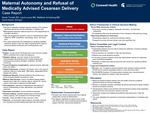
Repeated cesarean section (CS) refusal creates ethical challenges for healthcare teams. Patient autonomy must be balanced with preparedness for emergent maternal or fetal compromise. High-risk pregnancies typically involve an interdisciplinary team including obstetricians or maternal-fetal medicine specialists, nurses, obstetric anesthesiologists, and neonatology as indicated. Ethics consultants, social work, and additional support staff are involved depending on maternal or fetal risk factors.
A 35 year old G11P9 female with an ongoing pregnancy was indicated for CS. The patient's pregnancy was high-risk due to 3 CSs, 5 VBACs, a history of preterm labor and delivery in 3 pregnancies. The patient refused CS and other advised treatments in her previous four pregnancies. The current pregnancy was complicated by anemia and a fetal right aortic arch defect. The patient was adamant about CS refusal, even in the event that her and her child would otherwise die. The patient was DNR status and designated a DPOA. She also refused recommended therapies such Rhogam, neonatal vaccinations, blood transfusions, and vitals/fetal monitoring. Many discussions were had between providers and the patient about the implication of her decisions and her understanding of them. The patient had a history of discord with healthcare providers and potential psychiatric concerns, including a suicide attempt. A psychiatric consult was suggested during this pregnancy but the patient refused.
This case illustrates the challenges of balancing optimal medical practices with patient autonomy. Many ethical challenges arise when patients refuse indicated care. These are further complicated by pregnancy, in which there is concern for both the mother and the child. This medical team handled them by ensuring patient understanding, involving an interdisciplinary team, and striving to administer the best care while respecting patient autonomy. A good understanding of these challenges is critical for achieving better outcomes when patients refuse medical treatments.
Publication Date
5-8-2026
Disciplines
Anesthesiology | Obstetrics and Gynecology
Recommended Citation
Tonello D, Lyons L, Armstron M. Maternal autonomy and refusal of medically advised cesarean delivery. Presented at: Research Day Corewell Health West; 2026 May 8; Grand Rapids, MI.
Comments
2026 Research Day Corewell Health West, Grand Rapids, MI, May 8, 2026. Abstract 2156