


Files
Download Full Text (2.3 MB)
Description
A Bronchobiliary Fistula (BBF) is a pathological communication between the biliary system and the tracheobronchial tree. This communication is due to a rare complication that results from a bile collection eroding through the pleura and into the small airways. The resulting destruction of lung tissue can lead to chronic infections as well as bilioptysis, the presence of bile in the sputum, a defining feature of BBF. BBFs are most associated with iatrogenic injury, trauma, infection, and metastasis. Rarely, Radioembolization and subsequent post-procedural necrosis may create conditions for BBF formation.
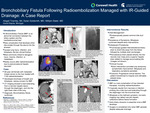
A 69-year-old female with a history of breast cancer metastatic to the liver was treated with radioembolization (Y-90). She later presented with shortness of breath accompanied by bilioptysis, leading to suspicions of BBF. CT demonstrated a tract extending from the necrotic liver mass, through the diaphragm, and into the right lower lobe of the lung.
BBF is a rare complication of radioembolization, forming when tissue necrosis/infection erodes into an adjacent bile duct, and then through the diaphragm into the bronchial tree. Interventional radiologists should recognize this potential complication in patients undergoing liver‑directed therapies. While bilioptysis is the key symptom, cross‑sectional imaging can detect a necrotic/infected hepatic collection earlier, allowing intervention that may prevent BBF. Once a BBF occurs, early biliary diversion is imperative, with surgery usually reserved for persistent cases.
Publication Date
5-8-2026
Recommended Citation
Townley A, Goldsmith D, Slater W. Bronchobiliary fistula following radioembolization managed with IR‑guided drainage: A case report. Presented at: Research Day Corewell Health West; 2026 May 8; Grand Rapids, MI.
Comments
2026 Research Day Corewell Health West, Grand Rapids, MI, May 8, 2026. Abstract 1993