


Files
Download Full Text (645 KB)
Description
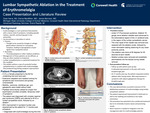
Erythromelalgia is a rare syndrome that presents with a classic triad of symptoms, including episodic redness, warmth, and burning pain in the extremities. It can be primary in nature or associated with thrombocytopenias or other medical conditions (secondary). Primary erythromelalgia is thought to be caused by changes in voltage-gated sodium channels on nociceptive receptors, leading to dysregulation of pain signals from nonpainful stimuli. Management of these patients can be difficult, as they are often resistant to treatment. Lumbar sympathetic ablation, a form of sympathectomy, is a potential treatment for erythromelalgia. However, only a handful of cases have been reported in the literature and long-term post-ablative outcomes are unknown. This exhibit outlines a case of successful lumbar sympathectomy in a patient with erythromelalgia that produced long lasting symptom improvement.
The patient is a 23 year old female, now diagnosed with erythromelalgia, who presented to the Corewell Health Grand Rapids Emergency Department for unrelenting foot and hand pain. She previously had an extensive outpatient workup for these symptoms, which was inconclusive. NSAIDs, colchicine, diclofenac gel, and gabapentin were trialed without relief. Inpatient evaluations from general medicine, infectious disease, neurology, and rheumatology revealed another grossly unremarkable workup. Popliteal nerve blocks were placed by anesthesia in preparation for a foot examination. These blocks completely resolved her symptoms, which recurred once the block wore off. Interventional Radiology was then consulted for a lumbar sympathetic nerve block, which was successful in reducing her symptoms. This was followed by a lumbar sympathetic nerve ablation given the nerve block success. The patient indicated 90% improvement in her pain symptoms for 17 months following the procedure.
This case demonstrates successful treatment of the debilitating symptoms of erythromelalgia using lumbar sympathetic ablation. Interestingly, the patient experienced improvement in both pain as well as the swelling and erythema in her lower extremities. With the procedure's minimally invasive nature and promising results, it has potential to be a preferred treatment option. More research is needed to integrate it into the management plan for erythromelalgia patients.
Publication Date
5-8-2026
Recommended Citation
Harris Z, MacMillen C, Morrison J. Lumbar sympathetic ablation in the treatment of erythromelalgia: A case study and review of literature. Presented at: Research Day Corewell Health West; 2026 May 8; Grand Rapids, MI.
Comments
2026 Research Day Corewell Health West, Grand Rapids, MI, May 8, 2026. Abstract 1985