


Files
Download Full Text (579 KB)
Description
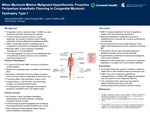
Congenital myotonic dystrophy type 1 (CMD1) is a rare autosomal dominant neuromuscular disorder, with an incidence of 2-28 per 100,000 live births. Expansion of CTG repeats in the DMPK gene results in dysfunctional myotonin protein kinase, leading to impaired structural integrity and function of cardiac and skeletal muscle and neurons. Clinically, CMD1 is characterized by myotonia, cataracts, and cardiac conduction abnormalities. These multisystem features pose significant anesthetic risk in the peripartum period such as preeclampsia and postpartum hemorrhage. However, due to the rarity, heterogeneity, and complexity of CMD1, there is no consensus regarding optimal peripartum anesthetic management. This case underscores the value of proactive, multidisciplinary anesthetic planning to mitigate risk and guide safe obstetric anesthesia care in patients with CMD1.
A 31-year-old G1P0 woman with CMD1 and a history of nonischemic cardiomyopathy was referred for anesthesiology consultation at 29 weeks and 4 days gestation. Her symptoms included intermittent hand and tongue myotonia, neck and lower extremity weakness, often exacerbated by cold temperatures. She was fully ambulatory and an active runner. A transthoracic echocardiogram performed in 2024 demonstrated a left ventricular ejection fraction of 60-65%, mild mitral valve prolapse, and normal right ventricular size and function, representing significant improvement from prior nonischemic cardiomyopathy. Electrocardiography showed sinus bradycardia at 53 beats per minute. Following multidisciplinary review, a comprehensive peripartum anesthetic plan addressing medication selection and delivery considerations was established at 29 weeks and 4 days gestation.
This case highlights the importance of having a pre-determined plan for complex obstetric patients to ensure consistent evidence-based care, especially for a rare clinical disease process which requires emergent care. General anesthesia poses unique risks in pregnancy, and is often emergent for fetal concerns. Furthermore, MH presents similarly to CMD1, so a non MH-triggering anesthetic may be prudent to avoid diagnostic dilemma. The complexity of this case shows the need for patient-centered planning to drive safe pharmacological and procedural decision making.
Publication Date
5-8-2026
Recommended Citation
Bobba K, Doughty K, Chalifoux L. When myotonia mimics malignant hyperthermia: Proactive peripartum anesthetic planning in congenital myotonic dystrophy type 1. Presented at: Research Day Corewell Health West; 2026 May 8; Grand Rapids, MI.
Comments
2026 Research Day Corewell Health West, Grand Rapids, MI, May 8, 2026. Abstract 2020