


Files
Download Full Text (693 KB)
Description
There is well-established evidence linking iron deficiency to impaired brain development, with potential consequences including developmental delay and stroke. In contrast, the relationship between iron deficiency and cardiac function remains less clearly defined. Severe iron deficiency has been associated with cardiac electrophysiological abnormalities, such as QT and QTc prolongation, as well as impaired myocardial function, including dilated cardiomyopathy. These findings suggest that patients with severe iron deficiency may be at increased risk for life-threatening arrhythmias or other cardiac events. However, to date, there are no studies or case reports demonstrating a direct association between severe iron deficiency and cardiac arrest or cardiomyopathy, particularly in pediatric patients. This critical gap in the literature underscores the importance of this case report.
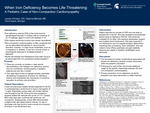
The patient is a previously healthy 5-year-old female who presented to the emergency department in cardiorespiratory arrest in the setting of severe iron deficiency anemia. She was reportedly a picky eater whose diet consisted primarily of chicken nuggets, fries, and processed snacks. She had received limited medical care throughout her life and was minimally vaccinated. On presentation, her hemoglobin was profoundly low at 1.5 g/dL, with a normal white blood cell and platelet count. Head computed tomography was unremarkable. Chest radiography showed marked cardiomegaly. An echocardiogram revealed severe systolic dysfunction with an ejection fraction of 17% and evidence of left ventricular non-compaction. Subsequently, a brain MRI demonstrated multiple small right-sided embolic infarcts, and MRA of the brain revealed possible stenosis of the A1 segment. On the day of discharge, she was additionally found to have a small, non-occlusive thrombus in the left femoral vein.
The paucity of literature examining the relationship between iron deficiency and cardiac function highlights an opportunity to expand current knowledge. As pediatricians, it is essential to broaden our understanding of iron deficiency and recognize the diverse ways it may impact the children we serve. Further exploration of this potential association may help identify conditions for which iron-deficient children are at increased risk. Equally important, however, is the continued emphasis on prevention of iron deficiency via family education and early intervention.
Publication Date
5-8-2026
Disciplines
Pediatrics
Recommended Citation
Ahmann L, Mitchell D. When iron deficiency becomes life-threatening: A pediatric case of non-compaction cardiomyopathy. Presented at: Research Day Corewell Health West; 2026 May 8; Grand Rapids, MI.
Comments
2026 Research Day Corewell Health West, Grand Rapids, MI, May 8, 2026. Abstract 2059