


Files
Download Full Text (286 KB)
Description
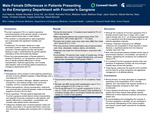
Fournier's gangrene (FG) is a rapidly progressive necrotizing fasciitis of the perineal, genital, or perianal regions, predominantly affecting men and poorly characterized in women. This study examined gender-specific differences in clinical features, treatment, and mortality among emergency department (ED) patients diagnosed with FG.
A retrospective cohort analysis was performed on adult patients presenting to the EDs of eleven hospitals across 19 Michigan counties from 2012 to 2022 with a diagnosis of FG. Institutions included four rural centers, three community hospitals, and four university-affiliated hospitals. Demographics, clinical characteristics, treatments, and outcomes were compared between male and female patients using Chi-square or Fisher's Exact tests.
A total of 110 patients were treated for FG; 22 (20%) were female. Mean age was 53 years, and most patients were white (79% of men, 82% of women). Females had a higher mean body mass index than males (40.3 vs. 36.5, p = 0.01). Common presentations included genital pain, fever, abscesses, crepitus, edema, and cellulitis. Polymicrobial infection occurred in 69% of cases. Both sexes had similar comorbidities, FG severity index, hospital stays, readmissions, and debridement numbers. Mortality during hospitalization was 9.1% in women and 8.0% in men (p = 0.82); 30-day mortality was 9.1% versus 12.5% (p = 0.66). Higher FG severity predicted greater mortality or prolonged hospitalization (p = 0.022).
FG incidence remains lower in women (male-to-female ratio 4:1), but outcomes between genders were comparable and reflect markedly improved survival over historical rates.
Publication Date
5-8-2026
Disciplines
Emergency Medicine
Recommended Citation
Nations A, Woodland N, Hudock S, Hill E, Giolitti J, Pichot R, Hysell M, Bennett N, Singh M, Seamon J. Male-female differences in adult patients presenting to the emergency department with Fournier's gangrene. Presented at: Research Day Corewell Health West; 2026 May 8; Grand Rapids, MI.
Comments
2026 Research Day Corewell Health West, Grand Rapids, MI, May 8, 2026. Abstract 1907