


Files
Download Full Text (273 KB)
Description
Immune-related cutaneous adverse events represent a significant clinical problem in cancer checkpoint inhibitor therapy, the most rapidly growing cancer treatment (1). Pruritus affects approximately 14% to 47% of patients undergoing treatment with immune checkpoint inhibitors, with 1% to 3% experiencing severe, widespread, and debilitating symptoms (2). This adverse effect significantly impacts quality of life yet remains poorly understood and often difficult to manage. Standard treatments such as topical agents and antihistamines offer limited relief, especially in cases of generalized pruritus. Systemic corticosteroids may provide transient benefit but are generally avoided for long-term use due to adverse effects.
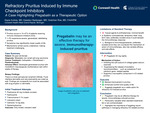
60-year-old female with metastatic non-small cell lung carcinoma treated with carboplatin, pemetrexed, and pembrolizumab. She Initially developed itchy rash which somewhat responded to courses of prednisone. Then she developed generalized pruritus without rash. Multiple courses of prednisone, as well as trials of hydroxyzine, topical agents, and topical lidocaine, yielded minimal and temporary relief.
This case highlights the potential role of pregabalin as an effective therapeutic option for severe, immunotherapy-induced pruritus, particularly when standard treatments fail.
Publication Date
5-8-2026
Disciplines
Internal Medicine
Recommended Citation
Nadarajan K, Andres K, Roe G. Pregabalin for severe immunotherapy-induced pruritus: A case report. Presented at: Research Day Corewell Health West; 2026 May 8; Grand Rapids, MI.
Comments
2026 Research Day Corewell Health West, Grand Rapids, MI, May 8, 2026. Abstract 1871