


Files
Download Full Text (259 KB)
Description
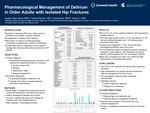
Isolated hip fractures (IHF) are a significant cause of morbidity and mortality among geriatric trauma patients due to diminishing age-related bone density. While surgical fixation of fractures is associated with greater survival, the inpatient stay confers additional risks on this population, particularly the potential for hospital-acquired delirium. Due to various physiological factors, polypharmacy, and comorbidities, geriatric patients are at an especially high risk. The objective of this study is to analyze medication use for delirium management in older adults with IHF during hospitalization. The primary aim is to compare hospital length of stay, mortality, readmission rates, and hospice engagement among delirium patients with and without dementia, and all sustained IHF. Secondary aims include characterization of inpatient medication use and QTc changes among these cohorts.
This retrospective study was determined to be as a quality improvement project by the CHW IRB. Patients 65 years of age and older who were admitted to Butterworth Hospital with isolated hip fractures between January 1, 2018, and October 20, 2024, were included in the project. Among 2,121 patients, 68 patients had a diagnosis of delirium. Electronic medical records were reviewed by the project team, and data points were uploaded to a secure REDCap for analysis. Numeric outcomes were expressed as mean ± standard deviation or median.
68 geriatric patients with delirium met inclusion criteria, with a mean age of 85.2 years (range 67-99) and 57.4% were female. The mean length of stay was 7.8 days. The most frequent comorbidities were functional dependence (70.1%), hypertension (65.7%), hyperlipidemia (59.7%), osteoporosis (53.7%), and dementia (37.3%). Antipsychotics were used in 48.5% of patients, benzodiazepines in 22.1%, antihistamines in 16.2%, and opioid analgesics in 86.8%. Among antipsychotics, the most used agents were olanzapine (17.6% of patients), quetiapine (13.2%), and haloperidol (11.8%). Opioid analgesics included oxycodone (86.8%), fentanyl (58.8%), morphine (50.0%), and hydromorphone (35.3%). The mean QTc prior to administration of these medications was 456 ± 30 milliseconds, with a mean post-medication QTc of 463 ± 56 milliseconds. Unplanned ICU admissions were the most common hospital event at 13.2%. Readmission rates were 11.8% at 30 days; in-hospital mortality was 1.5%.
The results of this initial analysis demonstrate that the use of antipsychotics and analgesics was prevalent among geriatric trauma patients who had a diagnosis of delirium while admitted for IHF. Unfortunately, the use of antipsychotics and subsequent long QTc are common among elderly patients with dementia, highlighting the need for more stringent measures regarding medication selection and ECG monitoring in this population. Future studies should address comprehensive assessments aimed at limiting the use of these agents in the geriatric population.
Publication Date
5-8-2026
Disciplines
Trauma
Recommended Citation
David AR, Renner P, Krech L, Li G. Pharmacological management of delirium in older adults with isolated hip fractures. Presented at: Research Day Corewell Health West; 2026 May 8; Grand Rapids, MI.
Comments
2026 Research Day Corewell Health West, Grand Rapids, MI, May 8, 2026. Abstract 2078