


Files
Download Full Text (584 KB)
Description
Recent immigration policy changes and the rescinding of the Department of Homeland Security's "sensitive areas" directive have heightened fear among vulnerable populations, including undocumented individuals, asylum seekers, and their families. This climate of fear has contributed to decreased utilization of essential services such as healthcare, WIC, SNAP, and prenatal care, leading to adverse health outcomes including malnutrition, worsening chronic disease, and increased fetal and infant morbidity and mortality. Pulso Comunitario was developed to address these barriers by creating trusted community hubs that provide accessible healthcare services, education, and resource navigation.
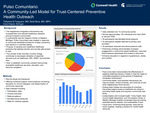
Methods: Using a Plan-Do-Study-Act (PDSA) quality improvement framework, community-based interventions were implemented in community centers to deliver low-barrier healthcare services. Offerings included nutrition support, blood pressure monitoring, education on chronic diseases, and dissemination of community resources. Data collected included participation rates, clinical outcomes, referral patterns, and health indicators such as elevated blood pressure and new diagnoses.
Across more than 10 community events, approximately 104 individuals were served. Twenty-two participants were referred to primary care for longitudinal follow-up, and 28 were identified with elevated blood pressure. Thirty-five individuals received home blood pressure cuffs to support ongoing monitoring. Preliminary findings demonstrated increased engagement in community-based healthcare, improved blood pressure awareness and control, identification of previously undiagnosed conditions, and enhanced medication adherence. Survey data revealed persistent fear of deportation as a barrier to traditional healthcare settings, while highlighting increased trust and utilization of community-based services. Additionally, reductions in emergency department utilization and complications from manageable chronic conditions were observed among participants.
Pulso Comunitario demonstrates the effectiveness of adapting healthcare delivery models to meet the needs of vulnerable populations during periods of heightened immigration enforcement. Community-based, trust-centered interventions can improve access, clinical outcomes, and continuity of care while mitigating fear-driven barriers. Scaling these initiatives and advocating for policies that protect patient access to healthcare are critical to promoting health equity and long-term community well-being.
Publication Date
5-8-2026
Recommended Citation
Ferguson T. Pulso Comunitario: A community-led model for trust-centered preventive health outreach. Presented at: Research Day Corewell Health West; 2026 May 8; Grand Rapids, MI.
Comments
2026 Research Day Corewell Health West, Grand Rapids, MI, May 8, 2026. Abstract 2108