


Files
Download Full Text (378 KB)
Description
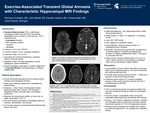
Transient global amnesia (TGA) is a self-limiting neurological syndrome characterized by anterograde amnesia, mild retrograde amnesia, and confusion lasting less than 24 hours.1 The incidence of TGA is 3.4 to 10.4 per 100,000 people, most commonly affecting individuals aged 51 to 80 without gender predilection.2 Recurrence rates are 2.9 to 23.8% and is associated with a younger age at first episode and migraine history.1,3 Radiographically, TGA classically manifests as punctate unilateral foci of restricted diffusion in the CA1 field of the hippocampus on diffusion-weighted MRI, most prominent 24 to 48 hours after symptom onset.2 While the pathogenesis is not fully understood, it is associated with extreme temperatures, emotional distress, and strenuous activity.4 TGA has also been linked to iatrogenic causes including coronary angiography, cerebral angiography, and general anesthesia.
A 65-year-old female with a past medical history including type 2 diabetes mellitus, hypertension, hyperlipidemia, and hypothyroidism, presented to the emergency department as a stroke code for confusion and amnesia. Further assessment demonstrated isolated anterograde amnesia characterized by repetitive questioning. The patient's last known normal was the morning of symptom onset. Later in the day, after returning from a workout, she began experiencing confusion and disorientation. She was unable to recall events from the previous day or earlier in the week and her husband stated that she repeatedly asked questions regarding her whereabouts and activities. No vision loss, slurred speech, focal sensory or motor deficits, ataxia, vertigo, word-finding difficulties, or loss of consciousness were reported. Ten years prior, the patient experienced an episode of similar confusion and amnesia following head trauma.
This case demonstrates TGA with a characteristic clinical presentation and MRI findings. Although TGA has a relatively recognizable presentation, it remains a diagnosis of exclusion. Imaging findings are subtle yet can be critical to confirm the diagnosis. Clinicians and radiologists should maintain suspicion for TGA, and understand how specific brain imaging can clinch the diagnosis for this self limited condition, avoiding more extensive workup. Overall, the prognosis for TGA patients is good, with no increased stroke risk or established need for ongoing treatment.
Publication Date
5-8-2026
Disciplines
Neurology
Recommended Citation
Christians N, Witvliet L, Cadoret D, Nash A. Exercise-associated transient global amnesia with characteristic hippocampal MRI findings. Presented at: Research Day Corewell Health West; 2026 May 8; Grand Rapids, MI.
Comments
2026 Research Day Corewell Health West, Grand Rapids, MI, May 8, 2026. Abstract 2110