










-
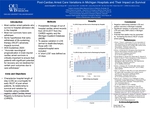
Cardiac Arrest Patient Length of Stay and Survival in Michigan Hospitals
Jaemin Song, David A. Berger, James H. Paxton, Joseph B. Miller, Joshua Reynolds, Nai-Wei Chen, and Robert Swor
Publication Date: 5-2-2022
INTRODUCTION
Current guidelines recommend deferring prognostic decisions for at least 72 hours following admission after Out of Hospital cardiac arrest (OHCA). Most non-survivors experience withdrawal of life-sustaining therapy (WLST), and early WLST may adversely impact survival. We sought to characterize the hospital length of stay (LOS) and timing of Do Not Resuscitate (DNR) orders (as surrogates for WLST) to assess their relationship to survival following cardiac arrest. -
Ventricular assist device association in improving outcomes in patients resuscitated from out of hospital cardiac arrest
Julie Tram, Andrew Pressman, Nai-Wei Chen, David Berger, Joseph Miller, Robert Welch, Joshua Reynolds, James Pribble, Robert Swor, and CARES Surveillance Group
Publication Date: 5-2-2022
INTRODUCTION
There has been continued debate on the efficacy of ventricular assist devices (VAD) on improving survival outcomes in post cardiac arrest patients.
The objective of this study is to assess whether the use of VAD is associated with improved survival outcome in patients resuscitated from out-of-hospital cardiac arrest in Michigan. -
Assessing Geriatric Patients in the Emergency Department Using A New Trauma Protocol
Benjamin Travers, Ali Beydoun, Patrick Karabon, Shanna Jones, Michael Opsommer, Aveh Bastani, and David Donaldson
Publication Date: 5-2-2022
INTRODUCTION
/="/">The Level III trauma protocol was implemented to reduce time to diagnosis and treatment for elderly patients (defined as patients aged > 65 who are taking anticoagulant/antiplatelet agents) presenting in the ED with a potential head injury after a fall. In 2017, approximately 11.4% of the patients triaged by the new Level III trauma protocol had an intracranial bleed, which is a population that had previously been overlooked as they have a low index of suspicion for an intracranial bleed. This study sought to determine if the recent implementation of the Level III trauma protocol in the Troy Beaumont Emergency Department (ED) has led to better health outcomes for this population..
-
A Case Study of Lemeirre’s Syndrome
Kyle Wesley, Jarred Anderson, and Dawn Zelenka
Publication Date: 5-2022
Introduction Lemierre’s syndrome, a rare but severe disease process, is a clinical condition characterized by septic thrombophlebitis of the internal jugular vein most commonly caused by Fusobacterium necrophorum. Lemierre’s syndrome should be suspected in a pediatric or young adult patient who presents with acute signs of septicemia, pneumonia or lateral neck pain preceded by viral upper respiratory symptoms. Diagnosis is confirmed with radiographic evidence of internal jugular thrombophlebitis with either bacteremia or evidence of septic emboli2 . Treatment consists of prolonged targeted antibiotic course and, infrequently, anticoagulation therapy.
-
Outcomes for Patients with Congestive Heart Failure and Chronic Kidney Disease Receiving Fluid Resuscitation for Severe Sepsis or Septic Shock
Melany Wiczorek, Ronny Otero, Steven Knight, Kaitlin Ziadeh, James Blumline, and Zachary Rollins
Publication Date: 5-2-2022
INTRODUCTION
Sepsis core measures are an integral part of sepsis treatment. Current fluid administration guidelines consist of administering at least 30cc/kg of intravenous fluids (IVF) per ideal body weight (IBW) within the first three hours of sepsis diagnosis regardless of pre-existing comorbidities at risk for fluid overload. This study aims to evaluate the outcomes of patients with a history of congestive heart failure (CHF) and/or chronic kidney disease (CKD) who receive fluid resuscitation for the management of severe sepsis or septic shock.
Printing is not supported at the primary Gallery Thumbnail page. Please first navigate to a specific Image before printing.