


Files
Download Full Text (298 KB)
Description
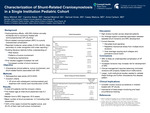
Shunt-related craniosynostosis (SRC) is a poorly characterized sequela of CSF diversion, with reported incidence varying significantly from 0.53% to 48.8%. This range likely reflects underreporting as suture fusion may be overlooked unless specifically studied. Current literature is restricted to a few case series, limiting analysis of risk factors and pathophysiologic mechanisms. Early data suggests that an increased number of shunt revisions as well as older age at first shunt insertion may be predictors of SRC development. In this study, we aim to expand upon the current body of knowledge by characterizing clinical patterns, suture involvement, and shunt-related factors associated with SRC observed at our institution. Additionally, we examine how our cases align with the current proposed mechanisms of SRC and highlight the diversity and complexity of this clinical entity.
This is a retrospective case series of patients treated with ventriculoperitoneal (VP) shunting followed by cranial vault reconstruction (CVR) for post-shunt craniosynostosis diagnosed between 2010-2025. Data were collected on the etiology of hydrocephalus, neurological comorbidities, shunt characteristics, time of SRC diagnosis, involved sutures, and associated complications.
There were a total of 6 patients fitting the search criteria. 67% of the patients were female, 100% of the patients were White and 100% of the patients were non-Hispanic. The median age at initial shunt placement was 9.3 weeks. The median time of onset between initial shunt placement and craniosynostosis diagnosis was 63.6 weeks. Patients had a mean of 4.2 shunt procedures, (before vs after craniosynostosis surgery.) All patients had involvement of the sagittal suture and 83.3% of the patients had multi-suture synostosis.
The substantial revision burden observed in our cohort suggests a potential association between increasing numbers of shunt revisions and elevated risk of SRC. Efforts to minimize the number of shunt revisions - when clinically appropriate - may help reduce the risk of SRC. However, this must be carefully balanced against the dangerous consequences of an untreated shunt malfunction. Overall, routine suture surveillance in patients treated with VP shunts may aid in early detection and improve the reporting and management of SRC.
Publication Date
5-8-2026
Disciplines
Plastic Surgery
Recommended Citation
Mitchell M, Baker C, Moshref H, Girian S, Madura C, Carlson A. Characterization of shunt-related craniosynostosis in a single institution pediatric cohort. Presented at: Research Day Corewell Health West; 2026 May 8; Grand Rapids, MI.
Comments
2026 Research Day Corewell Health West, Grand Rapids, MI, May 8, 2026. Abstract 2116