


Files
Download Full Text (2.9 MB)
Description
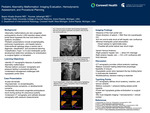
Abernethy malformations are rare congenital portosystemic shunts (< 200 reported cases) where portal blood bypasses the liver and drains into systemic circulation. Pediatric patients may present with encephalopathy, pulmonary hypertension, or hepatic lesions. Interventional radiologists are central to diagnosis and management. Accurate classification (Type I vs II) and evaluation of intrahepatic portal arborization are essential to determine candidacy for endovascular closure versus surgical ligation or transplant.
An 8-year-old girl was evaluated after an abdominal ultrasound (US) revealed multiple hepatic nodules up to ~4 cm in size and an anomalous connection between the portal vein and IVC. She was clinically well without neurological symptoms or signs of encephalopathy. However, laboratory tests showed mild liver dysfunction and shunt-related metabolic abnormalities. Her serum bilirubin and liver enzymes were mildly elevated, and blood ammonia was ~80 µmol/L (normal < 50). Notably, her prothrombin time was prolonged, reflecting reduced synthetic liver function, though no coagulopathy-related symptoms were present. Given the combination of large hepatic lesions and hyperammonemia in a child with a portosystemic shunt, a comprehensive workup was undertaken to characterize the nodules and plan for definitive treatment.
1) CT venography defines precise Abernathy malformation anatomy (shunt caliber, insertion site, venous anomalies) 2) Balloon occlusion and pressure testing assesses portal capacity and tolerance for shunt closure 3) Distinguishing hypoplastic from absent intrahepatic portal veins is key to selecting transcatheter vs surgical management 4) IRs must integrate imaging, hemodynamics, and multidisciplinary input when planning interventions.
Publication Date
5-8-2026
Disciplines
Radiology
Recommended Citation
Khatib-Shahidi B, Jahangiri Y. Pediatric Abernethy malformation: Imaging evaluation, hemodynamic assessment, and procedural planning. Presented at: Research Day Corewell Health West; 2026 May 8; Grand Rapids, MI.
Comments
2026 Research Day Corewell Health West, Grand Rapids, MI, May 8, 2026. Abstract 2144