


Files
Download Full Text (468 KB)
Description
West Nile Virus (WNV) is a ssRNA arbovirus endemic to the United States that is known to cause neuroinvasive disease such as meningitis, encephalitis, and flaccid paralysis, typically detected through WNV-specific antibodies. However, obstructive hydrocephalus and the diagnostic pitfalls that chronic B cell depleting therapy generate in this disease have not been clearly described in the literature.
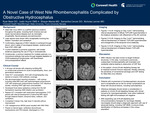
We report what proved to be a diagnostically challenging case of WNV rhombencephalitis complicated by obstructive hydrocephalus in a patient with multiple sclerosis on long term ocrelizumab. A 44-year-old female with PPMS on ocrelizumab, presented with acute onset of fever, fatigue, confusion, and worsening weakness. Encephalopathy progressed despite empiric antibiotics requiring intubation, with EEG demonstrating focal status epilepticus, resolving with ASMs.
Development of severe rhombencephalitis with obstructive hydrocephalus represents an extremely rare manifestation of WNV infection. Prior reports of similar MRI findings in the thalami and posterior fossa, suggesting a predilection for subcortical structures, but no cases of obstructive hydrocephalus readily exist in the literature. Furthermore, its occurrence in the setting of B cell depleting immunotherapy illustrates the limitations of traditional antibody testing in this patient population and highlights the early adoption of metagenomic NGS for accurate management.
Publication Date
5-8-2026
Disciplines
Neurology
Recommended Citation
Bean R, Huynh J, Marsia S, Cencer S, Lannen N. A novel case of West Nile Virus rhombencephalitis complicated by obstructive hydrocephalus. Presented at: Research Day Corewell Health West; 2026 May 8; Grand Rapids, MI.
Comments
2026 Research Day Corewell Health West, Grand Rapids, MI, May 8, 2026. Abstract 1918