


Files
Download Full Text (423 KB)
Description
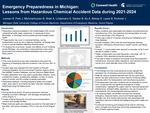
Hazardous chemical accidents in the United States (US) involve unintentional spills, leaks, explosions, or exposures to toxic, flammable, or otherwise harmful substances that threaten public health. These events may occur in industrial facilities, during transportation (e.g., rail or highway incidents), at storage sites, or as a result of natural disasters that affect chemical plants. To analyze the occurrence, causes, and effects of such incidents across Michigan, we conducted a cross-sectional survey using government and publicly available databases over a four-year study period.
This cross-sectional survey was conducted to document the frequency of hazardous chemical incidents in the US from 2021 to 2024. Incident data was collected from the Coalition to Prevent Chemical Disasters, the Environmental Protection Agency (EPA), the HAZMAT Incident Database, and the Chemical Safety Board. A basic abstraction form was used to guide data collection, which included the location, substance(s) released, number of victims, types of injuries, and the number of people evacuated. Descriptive statistics, including frequency tables and incident maps, were used to summarize the data. Interrater reliability was assessed using the kappa statistic.
During the study period, 55 serious hazardous chemical incidents occurred in Michigan, resulting in damages exceeding $ 2 million. These incidents frequently occurred around transportation corridors and storage facilities. Most chemical spills and releases occurred in the east side of the state with 7 incidents (13%) in the city of Flint. Many incidents were associated with plastics and petrochemical manufacturing (18%), the extraction and transportation of crude oil and natural gas (15%), and the transportation and storage of chemicals (6%). There was a total of 13 injuries (including two firefighters) and three fatalities. Overall, 11 communities were required to evacuate, while 9 were advised to shelter in place. Water contamination occurred frequently in the state, with 10 incidents (18%) resulting in contamination. The data in these surveillance summaries show that equipment maintenance, improved safety regulations, and training to prevent human error could alleviate many of the incidents.
This cross-sectional survey underscores the persistent risk of hazardous chemical incidents in Michigan, with 55 serious events reported over four years. These incidents, often linked to human error in transportation and manufacturing sectors such as plastics, petrochemicals, and oil and gas, highlight the need for improved equipment maintenance, stricter safety regulations, appropriate fire suppressants, and robust training. Strengthened coordination among industry, emergency responders, and environmental agencies, alongside continued monitoring, is essential.
Publication Date
5-8-2026
Disciplines
Emergency Medicine
Recommended Citation
Loonen S, Park J, Michmerhuizen B, Shah A, Lindemann E, Decker B, Ky A, Bishay D, Lewis B, Krohmer J. Emergency preparedness in Michigan: Lessons from hazardous chemical accident data during 2021-2024. Presented at: Research Day Corewell Health West; 2026 May 8; Grand Rapids, MI.
Comments
2026 Research Day Corewell Health West, Grand Rapids, MI, May 8, 2026. Abstract 1889