


Files
Download Full Text (175 KB)
Description
Access to high-quality surgical care in rural and resource-limited settings remains a persistent challenge in the United States, largely driven by disparities in the distribution of the general surgery workforce. Rural communities experience disproportionate shortages of surgeons, contributing to delays in care and limited access to essential surgical services. In recognition of this need, graduate medical education has increasingly emphasized exposure to rural practice environments, with recent Accreditation Council for Graduate Medical Education requirements encouraging training in resource-limited settings. In 2023, the Corewell Health West General Surgery Residency Program implemented a postgraduate year (PGY)-3 rural general surgery rotation at Pennock Regional Hospital in Hastings, Michigan. The rotation was designed to provide broad clinical exposure, increased operative autonomy,
This quality improvement initiative evaluated a postgraduate year (PGY)-3 rural general surgery rotation at Pennock Regional Hospital in Hastings, Michigan, within the Corewell Health West General Surgery Residency Program. All residents who completed the rotation were eligible to participate. A voluntary, anonymous survey was distributed via Microsoft Forms following rotation completion. No personal identifiers were collected, and responses were de-identified at submission. The survey included Likert-scale and open-ended items assessing educational content, operative autonomy, case mix, faculty engagement, logistics, and overall satisfaction. Quantitative data were analyzed using descriptive statistics, including proportions and central tendency measures. Qualitative responses underwent inductive thematic analysis by independent reviewers to identify recurrent themes and actionable feedback. Data were securely stored and accessed only by the approved project team. Findings were review
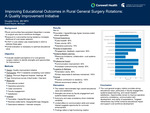
Nine PGY-3 residents completed the survey (100% response rate). Overall satisfaction with the rural rotation was high. Most residents agreed or strongly agreed that they were exposed to an appropriate breadth of general surgical cases (77.8%) and that operative volume was suitable for their training level (77.8%). Increased operative autonomy was reported by 66.7% of respondents, while 88.9% agreed that faculty provided effective supervision and teaching. All respondents agreed that the rotation contributed positively to their residency education, and 88.9% stated they would recommend the rotation to other residents. Exposure to resource-limited practice environments and multidisciplinary collaboration was consistently reported as beneficial. Fewer residents indicated that the rotation influenced their long-term career interest toward rural or community practice (44.4%). Qualitative analysis identified operative autonomy, exposure to advanced endoscopy and robotic surgery, and insight into rural healthcare sys
The PGY-3 rural general surgery rotation provided meaningful educational value and was highly rated by participating residents. The rotation offered appropriate operative autonomy, strong faculty engagement, and valuable exposure to rural surgical practice. While its influence on career choice was variable, resident feedback supports continued incorporation of structured rural rotations. Ongoing evaluation and targeted refinements may further enhance the educational impact and sustainability of rural surgical training experiences.
Publication Date
5-8-2026
Disciplines
Surgery
Recommended Citation
Snow D. Improving educational outcomes in rural general surgery rotations: A quality improvement initiative. Presented at: Research Day Corewell Health West; 2026 May 8; Grand Rapids, MI.
Comments
2026 Research Day Corewell Health West, Grand Rapids, MI, May 8, 2026. Abstract 2082