




-
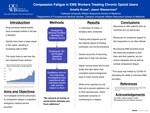
Compassion Fatigue Seen in EMS Workers Treating Chronic Opioid Users
Amelia Kruse and Jason Wasserman
Publication Date: 5-2023
Opioid use and misuse has been rising nationwide since 1999, as have the number of opioid-related deaths. This has not been limited to illicit drug use, but accelerated by prescribing practices that have ignored concerns about addiction. Emergency services have seen an increasingly high volume of opioid overdose and injury patients, but little additional support to respond to this crisis. This study seeks to investigate EMS workers perceptions of the opioid crisis and the barriers they face to providing adequate response.
-

The Meaning of Pediatric Assent: A Critical Scoping Review
Natalie Liogas, Amelia Najor, Jason Wasserman, Stephanie Swanberg, Abram Brummett, and Naomi Levanthal
Publication Date: 5-2023
The moral obligation to include children and adolescents in medical decisions has been long recognized. Soliciting pediatric assent is a component essential to this effort. Despite the AAP characterization of assent (AAP 1995; AAP 2016), there appears to be a lack of consensus regarding the operational and conceptual meanings of pediatric assent. This this critical scoping review provides an analysis of the varied meanings of pediatric assent in the clinical context.
-
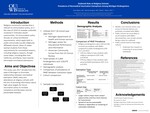
Outbreak Risks at Religious Schools: Prevalence of Nonmedical Vaccination Exemptions Among Michigan Kindergartens
Flora Martz, Patrick Karabon, and Mark C. Navin
Publication Date: 5-2023
Religious community membership is relevant to immunization policy, as in the case of 2019 US measles outbreaks clustered in Orthodox Jewish communities. US immunization policy focuses on school enrollment requirements, which apply both to public and private (usually religiously-affiliated) schools. Most US states exempt students from these requirements for nonmedical reasons, including religious reasons, though some states, including New York, California, and Maine, have recently eliminated nonmedical exemptions. This study uses 2017-18 data from the state of Michigan to illuminate relationships between nonmedical exemption (NME) rates and attendance at religious schools with the aim of providing information about high-value targets for future vaccination policy to increase compliance and decrease vaccine-preventable diseases.
-
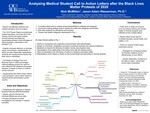
Analyzing Medical Student Call To Action Letters Following 2020 Black Lives Matter Protests
Nick McMillen and Jason A. Wasserman
Publication Date: 5-2023
The Flexner Report, written in 1910, may have revolutionized medical education, but it also recommended and led to the closure of all but two Black medical schools. While recent decades have lead to increased attention to diversity and inclusion, representation of historically marginalized groups among students and faculty has been slow to materialize.
Black Lives Matter protests encouraged a national dialogue over the need for more effective DEI initiatives and increased antiracist material in medical school curricula. Organizations such as White Coats 4 Black Lives developed “Call to Action” letters to medical school administrations across the country.
-

Pediatric Assent in Clinical Practice: A Critical Scoping Review on the Ethical Justifications for Assent
Amelia Najor, Natalie Liogas, Jason Wasserman, Stephanie Swanberg, Abram Brummett, Naomi Laventhal, and Mark C. Navin
Publication Date: 5-2023
Pediatric assent is an important ethical construct, yet there is little agreement on what precisely it means, including the ethical justifications for assent. The term is used to indicate everything from acquiescence to an analogue of informed consent itself. The primary goal of this study is to assess the range of ways that pediatric assent is specified in the clinical ethics literature, as well as what different conceptions intimate about its moral value. This systematic review will summarize the normative claims about pediatric assent in recent literature. Analysis will map divergent constructs and various moral and ethical justifications for pediatric assent.
-

Death Exposure Influence on Medical Students’ Attitudes Toward End-of-Life Care
Sara J. Barlow, Nelia Alfonso, and Jason A. Wasserman
Publication Date: 5-5-2022
INTRODUCTION
Advance directives help guide individuals and their families in making end-of-life decisions that physicians must respect and carry out on behalf of patients to provide optimal care that aligns with their wishes. The facilitation of end-of-life care and the application of advance directives are impacted by physicians’ attitudes and knowledge regarding this topic. Current studies focus on the perspective that practicing physicians have toward advance directives. Our goal is to examine the end-of-life preferences of medical students at Oakland University William Beaumont (OUWB) School of Medicine before and after clinical exposure to better appreciate how and when opinions regarding end-of-life care develop during physician’s education. -
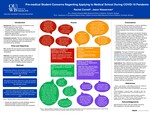
Pre-Medical Student Concerns Regarding Applying to Medical School During COVID-19 Pandemic
Rachel Connell
Publication Date: 5-5-2022
INTRODUCTION
Over the last two years, the COVID-19 pandemic has altered the system processes of medical education. The primary goal of this study is to identify themes regarding the concerns of pre-medical students in the 2020-2021 application cycle through qualitative analysis of www.studentdoctor.net medical school admission forum posts in order to contribute to the limited literature available on this relatively novel topic. -

Emergency Department Recidivism Due to Skin Lesions Among the Homeless Population
Kylee JB Kus and Jason A. Wasserman
Publication Date: 5-2-2022
INTRODUCTION
Ample research supports the correlation between homelessness and poor health generally. Individuals experiencing homelessness face a higher risk of dermatological health problems due to exposure and sanitation concerns and comprise a disproportionately large share of emergency department (ED) visits. This study assesses whether and how the interaction between homelessness and dermatological health contributes to ED recidivism. -

The Influence of BLM and the Death of George Floyd on Medical and Pre-med Students and Their Views on Institutional Racism
Asia Susko and Jason A. Wasserman
Publication Date: 5-2-2022
INTRODUCTION
Racial inequalities present in medical education in a multitude of ways, including basing disease prevalence on majority populations and using images that disproportionately represent white patients. George Floyd’s death was not only a sentinel event of police violence, but underscored broader systemic racism, including medicine’s potential for complicity. This study highlights the perspectives of premedical and medical students in light of George Floyd’s death and the Black Lives Matter movement. Their views help elaborate ways to better support students and staff of color in medical education. -
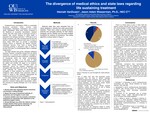
The divergence of medical ethics and state laws regarding life sustaining treatment
Hannah VanDusen and Jason A. Wasserman
Publication Date: 5-2-2022
INTRODUCTION
Research reveals that cardiopulmonary resuscitation (CPR) rarely leads to prolonged survival in patients with chronic illnesses in whom death is expected in the relative near-term. There is strong ethical consensus favoring a physician’s right to refuse to provide CPR when it is physiologically futile or medically inappropriate. State laws governing medical treatment, however, sometimes diverge from this guidance. This study examines laws related to life sustaining treatment, analyzing both physician and surrogate authority in decision making about resuscitation orders in the national context.
Printing is not supported at the primary Gallery Thumbnail page. Please first navigate to a specific Image before printing.